Sunday, 31 January 2016

OUAN501 - Subculture (9)

This lecture was the last before Christmas and so we were shown a documentary film titled, 'The Don Letts Subculture Films - The Unique Story of British Music & Street Style'. The lecture was based on the topic of subculture throughout the mid to late 20th century in Britain and I found the film itself fascinating as it touched on a lot of areas that I was familiar with but gave me a lot of information about the way subcultured thrived during different decades leading up to the 21st century. The vast number of subcultured the film looked at included, 'Teddy boys', 'rockers', 'mods', 'skin heads', 'suede heads', 'soul boys', 'punks', 'casuals', 'indie', 'ska', 'new wave', 'rave' and 'brit pop'. A timeline of subcultures spanning all the way from the 50s in the era just after world war II, all the way up to the late 80s and 90s.

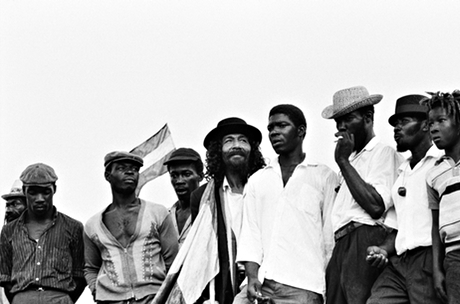
The documentary explained details about how the different subcultured originated, and spoke about the different aspects of each one. What I found interesting was the way people associated with certain subculcutres would adopt specific clothing and different clothing styles. For example, the 'Teddy boys' adopted an Edwardian clothing style and each subculture had specific clothing items and styles associated with it. The way different subcultures evolved and devloped was also mentioned in the documentary. It seemed like each one only lasted a number of years before it either faded out or became less popular and a different subculture took over in a sense. Each subculture had certain influences and a reason for its existance. For example, it wasn't just the case that someone decided to dress a certain way or do certain things for no reason at all, but rather they stood for something weather that is an ideology or a movement or something else. A more specific example of this can be seen in the 'skin head' movement that originated in the 1960s. This particular movement was heavily influenced by west indian rude boy culture, the rude boy subculture arose from the poorer sections of Jamaica, specifically the capital, Kingston. It was associated with violent youths in combination with ska and rocksteady music. There is a physical aspect of both the rude boy subcultre and the skin head culture that can be seen in that many 'rude boys' favored sharp suits, thin ties, and pork pie or Trilby hats, that can also be seen in the way skin heads dress that is quite smart, or fashionable. However, this movement evaporated in the early 70s. It is now more commonly associated with the idea of racism that was less popular among the skinhead culture in the late 1960s. This was started when some of the skinheads in the UK, including the black members engaged in violence against South Asian immigrants. This led to the movement being widely seen as a movement that promoted white supremacy and a level of racism that can still be seen today. I think the way this specific subculture evolved shows how powerful the use of ideas and the wanting to belong to something that's bigger than just yourself can be among people and society as a whole.

Overall, I found this documentary quitefulfilling, learning about the different subcultures that existed in the decades before I was born. It was also a nice way to have the lecture conducted for the last session before christmas. Furthermore, I don't think I would have seen the documentary had I not seen it in this session so it was a good opportunity. Finally, I think I took away a certain insight into the way societies and people thrive on the aspect of coming together and being part of something. Whilst also learnnig about the influences that can dicatate certain movements and the different impacts people have on each other even from across the world, as was seen with the rude boy and skin head subcultures.
Tuesday, 12 January 2016

OUAN501 - Censorship and Truth (8)

I found today's lecture incredibly insightful overall, I felt like I learnt a lot whilst also being exposed to a lot of work and history that I hadn't previously seen. The theme of the lecture was based around the idea of censorship and truth. Based on the title of the lecture, I had a faint idea about the content, but it was a very enjoyable presentation with lots of interesting information being delivered.

A premise that was common in all of the work and analogies delivered to us was the idea of false representation and the way an audience interprets things at face value rather than looking deeper. This was demonstrated in the way photographs are handled and shown to an audience in conjunction with the publishing of those photographs and the way they are delivered to the people who are viewing them. The first piece of photographic work we were shown was a depiction of the Gulf War. This was actually the first time I had seen any documentation of the Gulf war, I'm ashamed to say - especially when comparing it to the amount of documentation I've seen on other events as large scale as that. The tutor showed us some images from the war, specifically of some of its horrors. An example of this was images of soldiers that had been carbonised. This occurs when biological matter is exposed to sudden searing heat. (It was left to our imagination how this had happened but you assume it was from a bomb given the context of the photograph.) From this it can be carbonised very quickly, reducing the matter to just carbon, and destroying the original thing. The reason for showing us these images specifically is that they were deemed too graphic and too horrific to be shown publicly in the media. An image that a lot of emphasis was put on for depicting the idea of censorship and hiding the real truths behind the horrors of the ways was a photograph taken by Kenneth Jarecke, an American photojournalist. The photograph that was shown, depicted an Iraqi soldier incinerated inside a truck. The controversy and censorship problem arises when you learn that the American press organisations avoided publishing the photograph due to the fact that it contradicted their position on the war which was that they only attacked at night. Ultimately the issue is that since the photograph wasn't published, then in the mind of the American people it wasn't happening. Another photographers work we were shown, who happens to be someone whose work I've looked at before is Sally Mann. We looked at what she was doing in regards to censorship and how she contradicted the idea of it with her photography book 'Immediate Family', published in 1992. It was an incredibly fascinating collection of photographs and work as a whole, despite them only involving her three children. The content and themes running throughout the photographs seemed to be fairly straight forward and incredibly candid. They were playing games and just photographed going about their lives. Some of the criticism she received for the photographs were directed at the fact some of her younger children were photographed naked and then published. Due to this she had some very mixed responses. People wrote to her explaining how the photographs she had taken and published, induced past feelings around incest whilst others simply criticised her parenting. However there was some positive feedback on her work amongst everything else and Sally Mann was quoted saying, 'What an artist captures, what a mother knows and what the public sees can be dangerously different things'. In regards to the censorship issue again, this is yet another topic that people wanted covering up and hiding from public view - at least that was their opinion. But Sally Mann decided to publish her work for the world to see.

Throughout this lecture I've learnt a lot about various artists work and the way their work was handled in relation to censorship. Furthermore, it has been informative in respect to the way that we are more often than not 'guarded' from various forms of media and it's important not to take things at face value due to the way aspects such as press and media are censored to make sure it correlates with the public opinion, and what the public wants.